
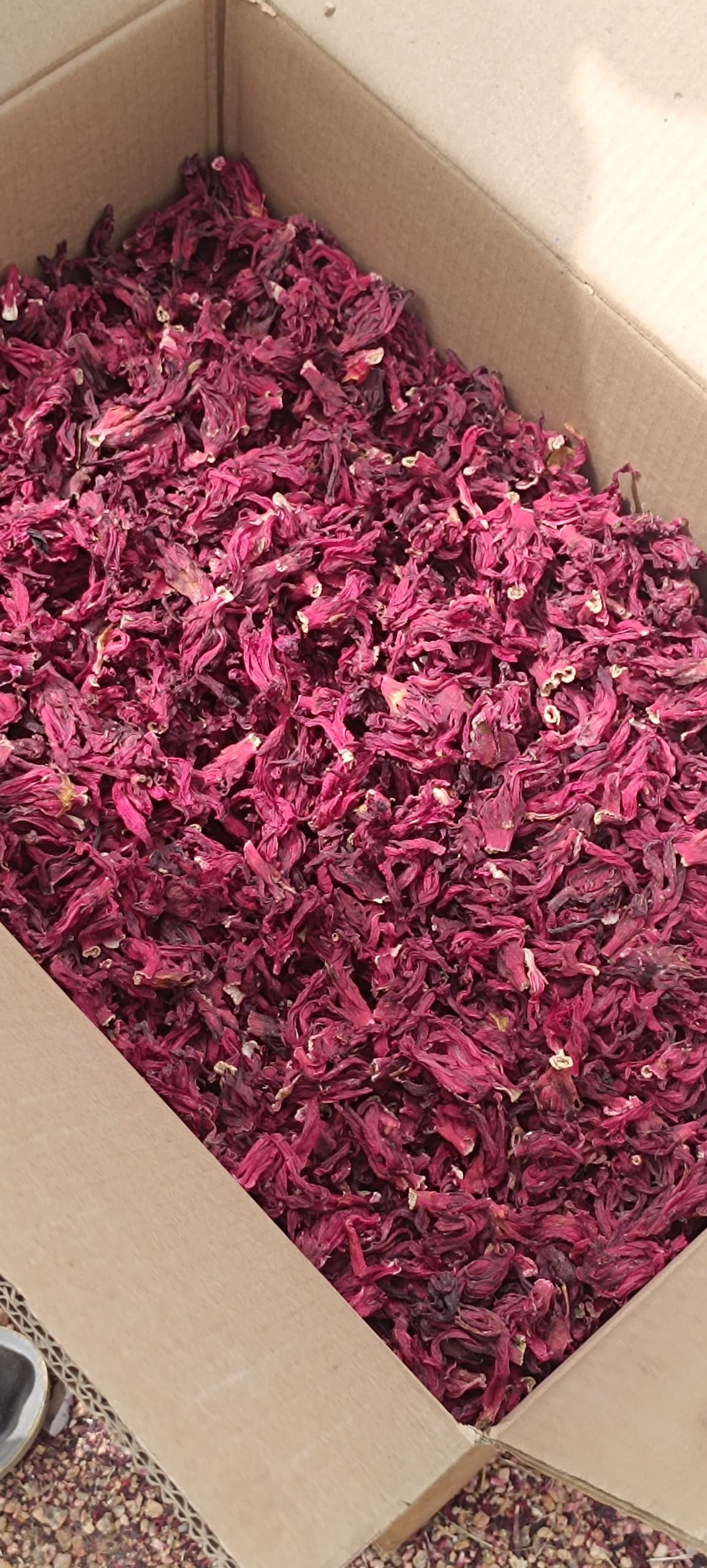
Hibiscus (Roselle Calyx)
Origin: NigeriaHibiscus (dried Hibiscus sabdariffa calyces) is prized for its deep red color and tart, cranberry-like flavor. Crezantium sources ours directly from growing regions in Nigeria.
Crezantium: a leading exporter of dried Hibiscus flowers from Nigeria.
What Is Hibiscus?
What's sold as “hibiscus” in the spice and beverage trade is actually the dried calyx — the fleshy part that surrounds the flower's base — of Hibiscus sabdariffa, also called Roselle. It's harvested, separated from the seed pod, and sun-dried until deep red and papery. Nigeria is one of the world's largest producers, and the dried calyces are the base ingredient for teas, natural food coloring and traditional beverages across West Africa, the Middle East and Latin America.
| Name | Common In |
|---|---|
| Zobo | Nigeria (the drink made from it) |
| Roselle | English / botanical common name |
| Karkade | Egypt & Sudan |
| Bissap | Senegal & West Africa |
| Flor de Jamaica | Mexico & Latin America |
Where It's Used
Beverages — primary use
Dried hibiscus calyces are steeped to make tart, deep-red infusions — known as Zobo in Nigeria, Karkade in Egypt and Sudan, Bissap in Senegal, and Flor de Jamaica across Mexico and Latin America.
Natural Food Coloring
The deep red pigment is used as a natural colorant in foods and beverages.
Traditional Use
Used in traditional preparations across West Africa and beyond.
Cosmetic Use
Extracts are used in some natural skincare and cosmetic formulations.
Buyer FAQ
Yes — hibiscus (as traded commercially) and Roselle both refer to the dried calyces of Hibiscus sabdariffa. Zobo, Karkade, Bissap and Flor de Jamaica are regional names for drinks made from it.
The calyx — the fleshy, cup-like part that surrounds the base of the flower — not the petals.
Primarily beverages (teas and infusions), plus natural food coloring and some cosmetic applications.
Order quantity, destination country and preferred packaging help us respond with accurate pricing and lead times faster.